
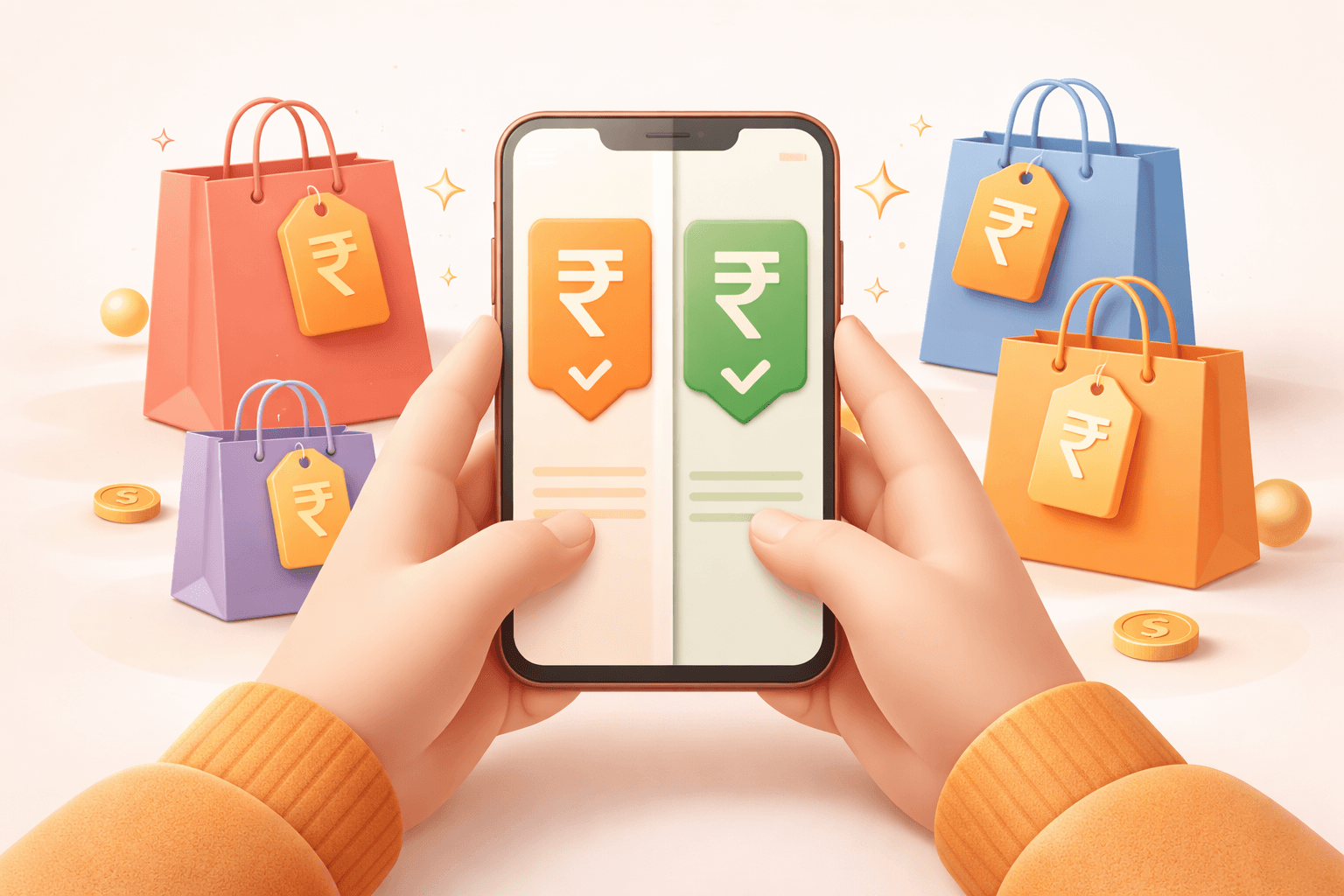
Why Comparing Prices Before Buying is Essential in India
Did you know that the same product can have a 20-60% price difference across Indian e-commerce platforms? A pair of headphones listed at ₹2,999 on one store might be available for ₹1,799 on another. Yet most shoppers buy from the first store they check.
With over 14 major e-commerce platforms operating in India — Flipkart, Amazon, Myntra, Ajio, Nykaa, Croma, Tata Cliq, Meesho, and more — the price gap has never been wider. This guide will show you exactly how to find the lowest price, every single time.
Step 1: Never Buy from the First Store You See
The biggest mistake Indian online shoppers make is buying from their default store. Each platform runs independent pricing algorithms, different seller commissions, and separate discount campaigns. What looks like a "great deal" on Amazon might be the regular price on Flipkart.
Pro tip: Always check at least 3 stores before buying anything over ₹500.
Step 2: Use a Price Comparison Tool
Manually checking 14 stores for every purchase is impractical. That's where price comparison platforms like xrupe come in. Instead of opening multiple tabs and searching each store individually, a price tracker aggregates prices from all major Indian e-commerce sites in one place.
Here's what a good price comparison tool should offer:
- Real-time prices from multiple stores
- Price history charts to see if the current price is actually a deal
- Price drop alerts so you get notified when prices fall
- Deal scoring to identify genuinely good offers
Step 3: Check the Price History
During sales events like Flipkart Big Billion Days or Amazon Great Indian Festival, many sellers inflate prices before the sale and then show a fake "discount." A price history chart instantly exposes this tactic.
For example, if a TV is shown as "₹24,999 (50% off from ₹49,999)" but the price history shows it's been ₹25,999 for the past 3 months, you know the "50% off" is misleading.
Step 4: Set Price Drop Alerts
The best prices often come at unexpected times — mid-week flash sales, clearance events, or seller-specific discounts. Instead of checking prices daily, set a price drop alert with your target price. When the price hits your target, you'll get notified instantly.
Step 5: Compare Beyond Just Price
The lowest price isn't always the best deal. Consider these factors:
- Delivery charges: A ₹200 cheaper product with ₹150 delivery isn't much savings
- Return policy: Some sellers have strict return windows
- Seller ratings: Low-rated sellers may send defective products
- Bank offers: Credit card discounts can make a higher-priced listing cheaper
- Exchange offers: Old device trade-in values vary by store
Top Indian E-Commerce Stores to Compare
Here are the major platforms you should be comparing across:
- Amazon.in — Electronics, books, everything
- Flipkart — Electronics, fashion, home
- Myntra — Fashion & lifestyle
- Ajio — Fashion with brand exclusives
- Nykaa — Beauty & personal care
- Croma — Electronics & appliances
- Tata Cliq — Luxury & electronics
- Meesho — Budget fashion & home
- JioMart — Groceries & daily essentials
- Samsung Store — Samsung products direct
How Much Can You Actually Save?
Based on data from thousands of products tracked on xrupe:
- Electronics: Average savings of ₹2,000-5,000 per product
- Fashion: 15-40% price variation across stores
- Home & Kitchen: Up to ₹3,000 savings on appliances
- Beauty: 10-25% variation between Nykaa, Amazon, and Flipkart
Start Saving Today
Price comparison isn't just for big purchases. Even on everyday items, the savings add up to lakhs over a year. Start using xrupe to compare prices, track history, and set alerts — all for free.
Your wallet will thank you.
Comments
No comments yet
Be the first to share your thoughts!
Leave a Comment
Your email address will not be published.